Interior Painting
Interior Painting
For homes in Norwood, Westwood, Walpole, Dedham, Canton and Sharon.
Most interior paint jobs fail for the same handful of reasons, and none of them are the paint. Sanding gets skipped on previously coated trim. Drywall patches go in unprimed and flash under the lights. Nail pops get filled but not stabilised, so they come back through the first heating season.
We work the other way round: the prep decides the finish, and the finish is what you live with. Walls, ceilings, trim, doors and closets, done room by room so your house stays usable while the work is going on.
What's included
What the job covers
- Walls, ceilings, trim, doors, casings and baseboards
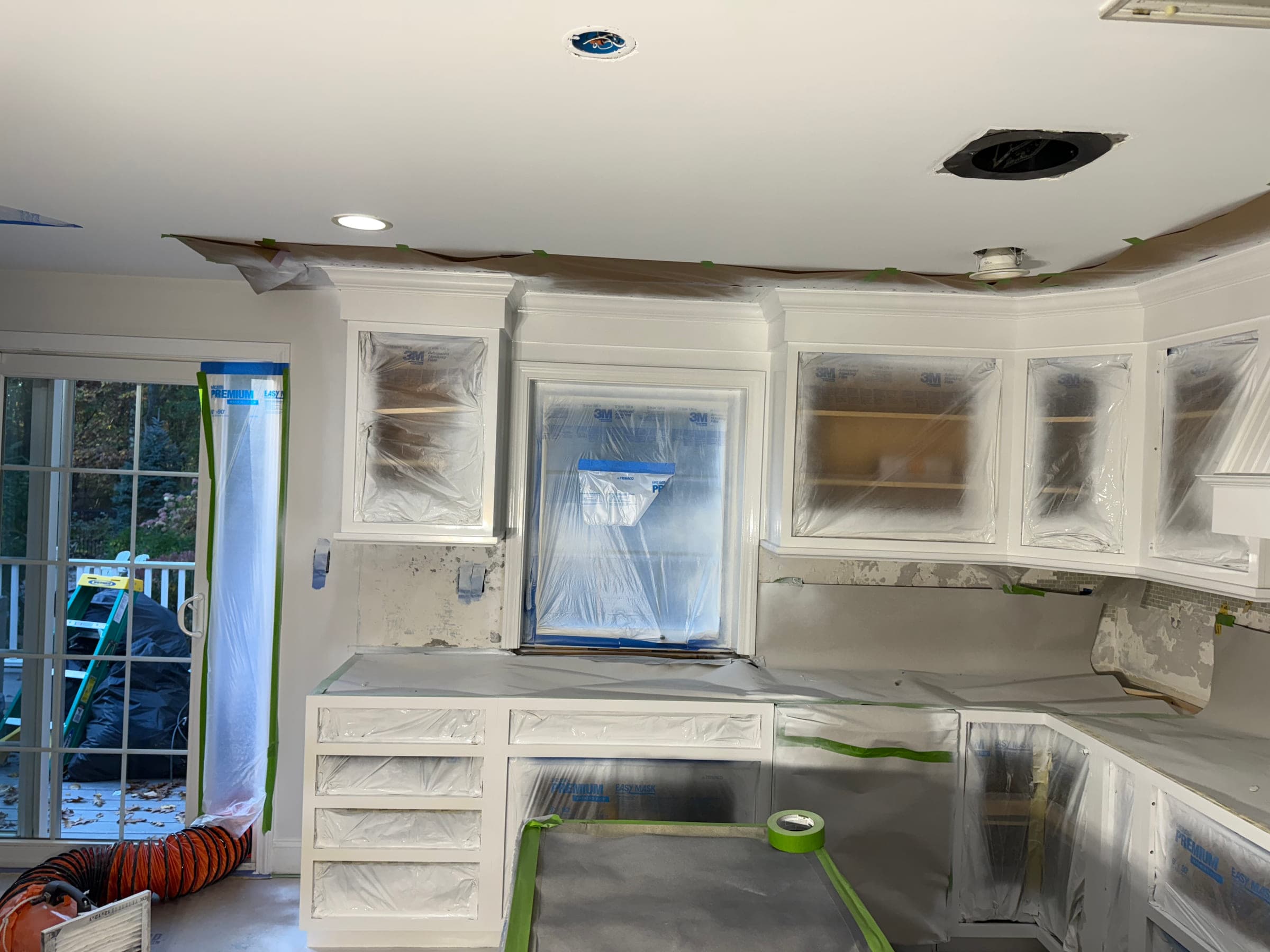
- Furniture moved to the centre and covered; floors protected wall to wall
- Patching, sanding to uniform porosity, and spot priming before any finish coat
- Bonding primer on glossy or previously oil-coated trim
- Two finish coats as standard — a third on deep colour changes
- Brushwork on trim and doors rather than spray, to avoid overspray in an occupied house
- Caulking at gaps where trim meets wall after paint
- Daily clean-up and a walkthrough before we call it done
Quoted separately
- Wallpaper removal and extensive plaster reconstruction are quoted separately
- Lead-safe work in pre-1978 homes requires specific handling — tell us the build year up front
What goes wrong
The problems we are actually solving
Patches that show up under the lights
Unprimed compound drinks paint at a different rate than the wall around it. Under recessed lighting or raking afternoon sun you see every one of them. Priming patches to match the surrounding porosity is a ten-minute step that decides whether the wall looks flat or blotchy.
Trim that peels at the corners
New coats over unsanded, previously glossy trim have nothing to grip. It looks fine on day one and lifts at the edges within a season or two. Scuff-sanding and a bonding primer fixes it permanently.
Dust through the whole house
Sanding without containment sends fine dust into HVAC returns and onto furniture two rooms away. Containment and sealed returns are part of the job, not an extra.
Living around the work
We sequence rooms so you always keep a kitchen, a bathroom, and a clear path between them. Low-VOC coatings mean bedrooms are usable again the same evening rather than days later.
How it runs
Step by step
- 01
Walk the rooms
We go room by room with you, note the surfaces that need real repair versus a light patch, and agree colours, sheens and the order rooms get done in.
- 02
Protect and contain
Furniture to the centre and covered, floors protected, returns sealed, trim and casings masked.
- 03
Repair and prep
Patch, stabilise nail pops, sand to a uniform surface, and spot-prime everything that needs it.
- 04
Prime and coat
Primer where the substrate calls for it, then two finish coats. Trim and doors are cut and brushed separately and given time to cure.
- 05
Walkthrough
We go through each room with you under the lighting you actually use, mark anything that needs a touch-up, and handle it before we pack up.
Workmanship
Where the time goes
Prep is most of the job
On a normal interior, more hours go into repair, sanding, masking and priming than into rolling paint. That ratio is the difference between a finish that holds and one that needs touching up inside a year.
Trim gets its own schedule
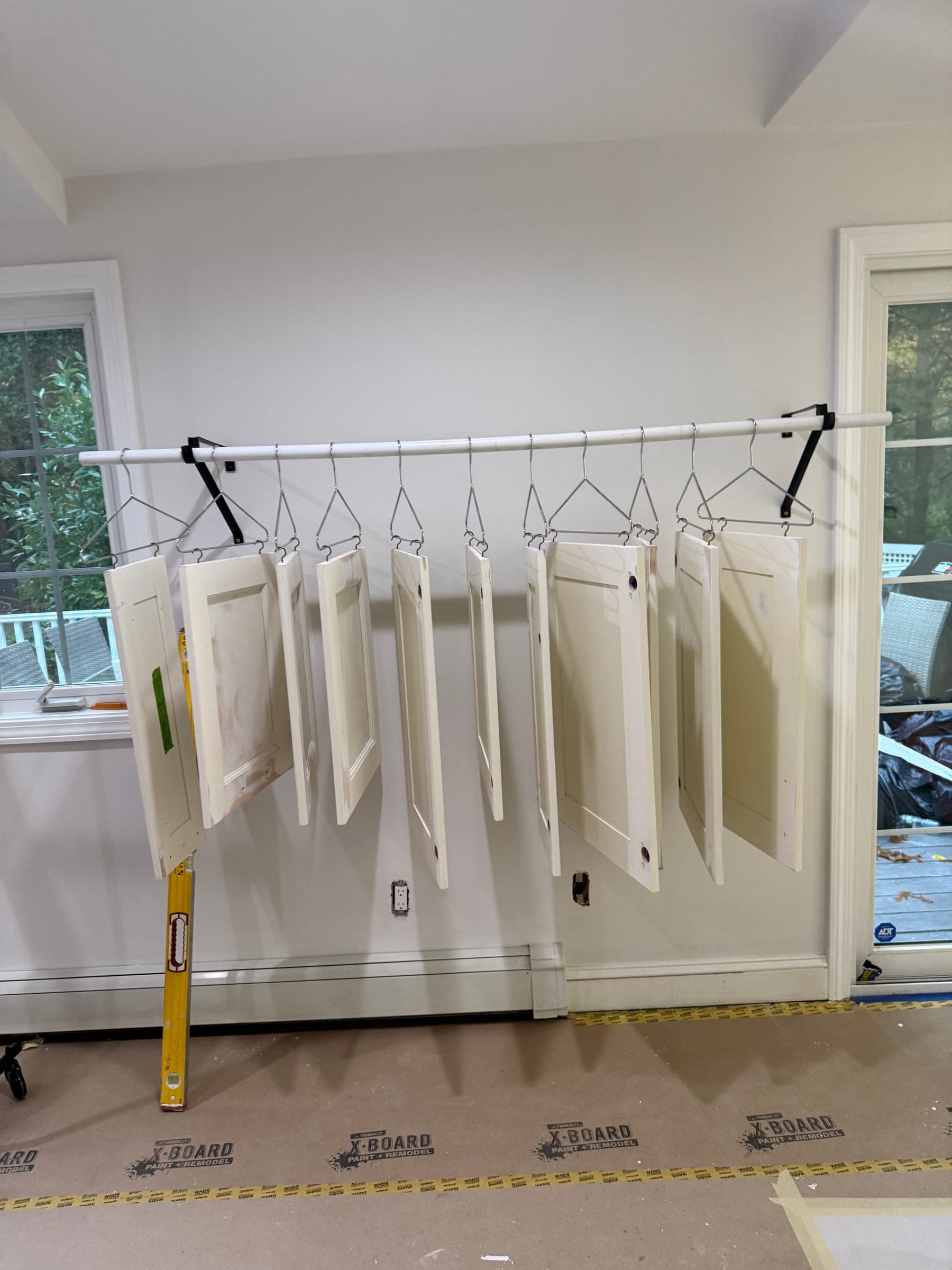
Trim takes a different application technique and dries at a different rate to walls. Rushing it to match wall timelines is what produces brush marks and soft masking lines. We let it cure before we finish the adjacent walls.
Sheen is a decision, not a default
Eggshell and satin on living space walls, semi-gloss or gloss on trim and doors where hands and cleaning happen, flat on ceilings so lap marks do not read. We will talk it through per room rather than applying one sheen everywhere.
Areas served
Interior Painting across our towns
We cover six towns around Norwood. Where we have written in depth about interior painting in a specific town, it is linked below.
Questions
Interior Painting questions
How long does a room take?
A standard bedroom or living room is one to two days depending on trim detail and ceiling height. You can normally use the room again once the final coat is dry to the touch, usually within a few hours.
What do I need to do before you arrive?
Take down wall hangings and anything breakable, and clear small items off surfaces. We handle moving the larger furniture, covering it, and all the masking, patching and sanding.
Do I need to move out?
No. We sequence rooms so you keep a kitchen, a bathroom and a route between them at all times, and use low-VOC coatings so rooms come back into use quickly.
Why do some walls need a third coat?
Deep colours, strong accent walls, and big jumps from dark to light usually need three to cover evenly. We will tell you after priming if that is the case rather than after you have been billed for two.
When is the best time of year?
Interior work runs year-round because temperature and humidity are controlled indoors. A lot of homeowners here book interiors for winter, when exterior work is off the table anyway.
What affects the cost of an interior job?
Square footage matters less than you would think. The real drivers are the amount of repair the surfaces need, the amount and complexity of the trim, ceiling height, how many colour changes there are, and whether the house is occupied. Send photos with your estimate request and we can be much more specific.
Related
Often needed alongside
Exterior Painting
Siding, trim and detail work prepped for New England freeze-thaw — scraped back to sound substrate, primed to match, and coated inside the weather window.
About exterior paintingCarpentry
Trim, framing, repairs and custom woodwork — sequenced with the painting and finish work so nothing gets built twice.
About carpentryKitchen Remodel
Demo through finish, with carpentry, painting and finish work coordinated by one contractor so the phases actually join up.
About kitchen remodel
Free estimates
Get a price for your interior painting
Send a few photos and a sentence or two about what you need. We will come back to you with next steps — and for most jobs we will want to see it in person before quoting a firm number.